Overview
-
Aggregate bandwidth requirements for these scale-across networks are projected to be more than 10 times greater than those of current front-end DCI networks.
-
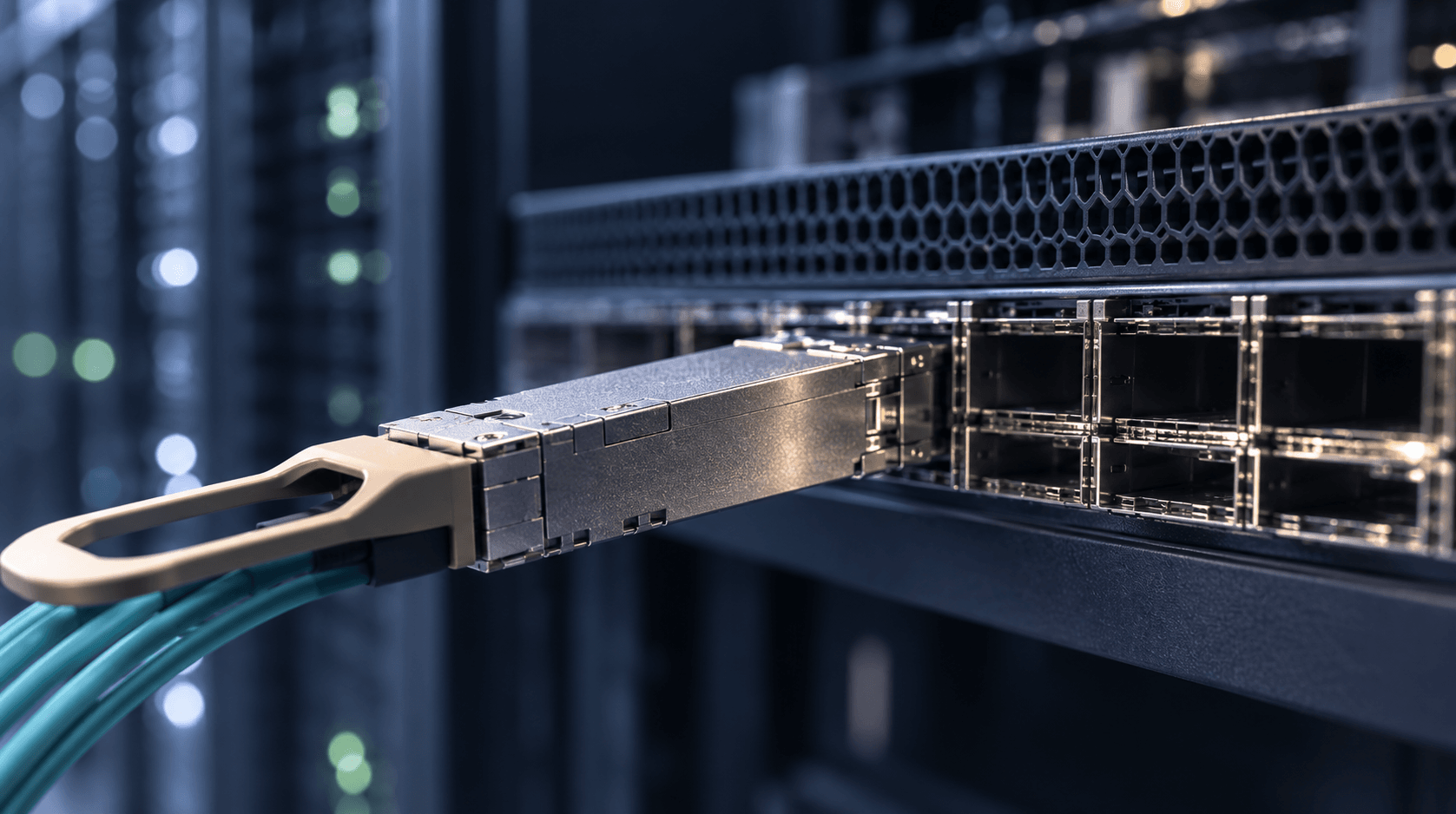
On the interconnect side, pluggable modules remain the primary form factor for scale-out networks, and we do not expect that to change.
- This is very bullish for companies like $AAOI.
-
Scale-out
- But it’s also just the transceiver market for scale-out and optical DSPs going into that segment. That’s upsized versus the prior growth rates we talked about. So that’s in the $500 million and the $1.5 billion. That business continues to be absolutely on fire, and we’re executing well there.
-
Scale-up
- Scale-up domains are expected to become significantly larger, requiring high bandwidth interconnects closely coupled with high radix, low latency switches.
- Scale-up opportunity remains massive and is still largely ahead of us.
- We are engaged in multiple deep discussions with tier 1 customers across our scale-up switch portfolio, with each engagement representing a multi-billion dollar lifetime revenue opportunity given the expected size of the scale-up TAM
- We see this as an and, not an or, and I think the magnitude of our scale-up optics opportunity next year is much larger than we thought just a quarter ago.
-
8K Filed last week
- an expanded commercial agreement and associated warrant with a key hyperscaler, one of the largest adopters of custom silicon.
- It spans a broad range of custom silicon programs, including those that attach to the TPU ecosystem, such as AI inference accelerators, storage controllers, network interface controllers, memory interface controllers, and near memory compute.
-
XPU-attach
- It includes inference accelerators, as you mentioned, also storage controllers, NICs, memory interface controllers, near memory compute, a whole bunch of different products
- They gave quite a detailed view of that in our June 2025 custom silicon event.
- It includes inference accelerators, as you mentioned, also storage controllers, NICs, memory interface controllers, near memory compute, a whole bunch of different products
-
Google partnership
- [Question:] For FY 2027, if you look at the $120 billion over the course of the years, that’s about $18 billion a year. At the $120 billion, divided by 6.5. That’s like adding an FY 2028 Marvell every year. I realize that we don’t know how much is incremental versus what’s already in your guides, but are we talking like FY 2029 and FY 2030 big step-ups as a result of this incrementally?
- [Answer]: When you look at the scale of this, your math is not wrong. What you can conclude from what I am saying is because most of this is comprehended already in next year, the big impact would be in 2029 and beyond. So if you took the full performance and the full opportunity, then you are right. It is just a monster number. What I would say, we do need the Analyst Day, though, I think you guys understand, to contextualize it and probably show some ranges of outcomes. But you should assume in that timeframe that on the custom side, these numbers would be a lot larger than overall custom than anybody has been modeling so far. I think there has been doubt for years that we could even do the $8 billion-$10 billion.
-
Memory
- you should expect to see a very comprehensive memory expansion section in our Investor Day presentation.
-
UAL
- We’re aggressively investing in UAL switching.
- There’s been a lot of companies that have tried and failed to do these radical size, very complex Ethernet switches, and it’s only getting harder with the SerDes performance and the speeds. But the next level of that is that you then need to show a compelling, clear roadmap that you can execute with credibility on the optics side, both NPO and then all the way to full integration on CPO.
-
Architecture
- Customers have varying architectures that they’re pursuing. It’s a little bit analogous to when people thought, well, there’s 800G DSPs, and then they’re going to move to 1.6T, and it’s all going to just cut over.
- one of the more interesting takeaways from Nvidia’s report last night is Jensen’s view of the fungibility of compute networking and memory to deliver performance in the AI data center in a cost-constrained world. Marvell is aligned with this idea of fungibility
- An ability to very quickly execute custom and semi-custom designs or modify our products or adapt to shifting architectures at Marvell, it’s a key capability,
Financials
- Prepayments to suppliers
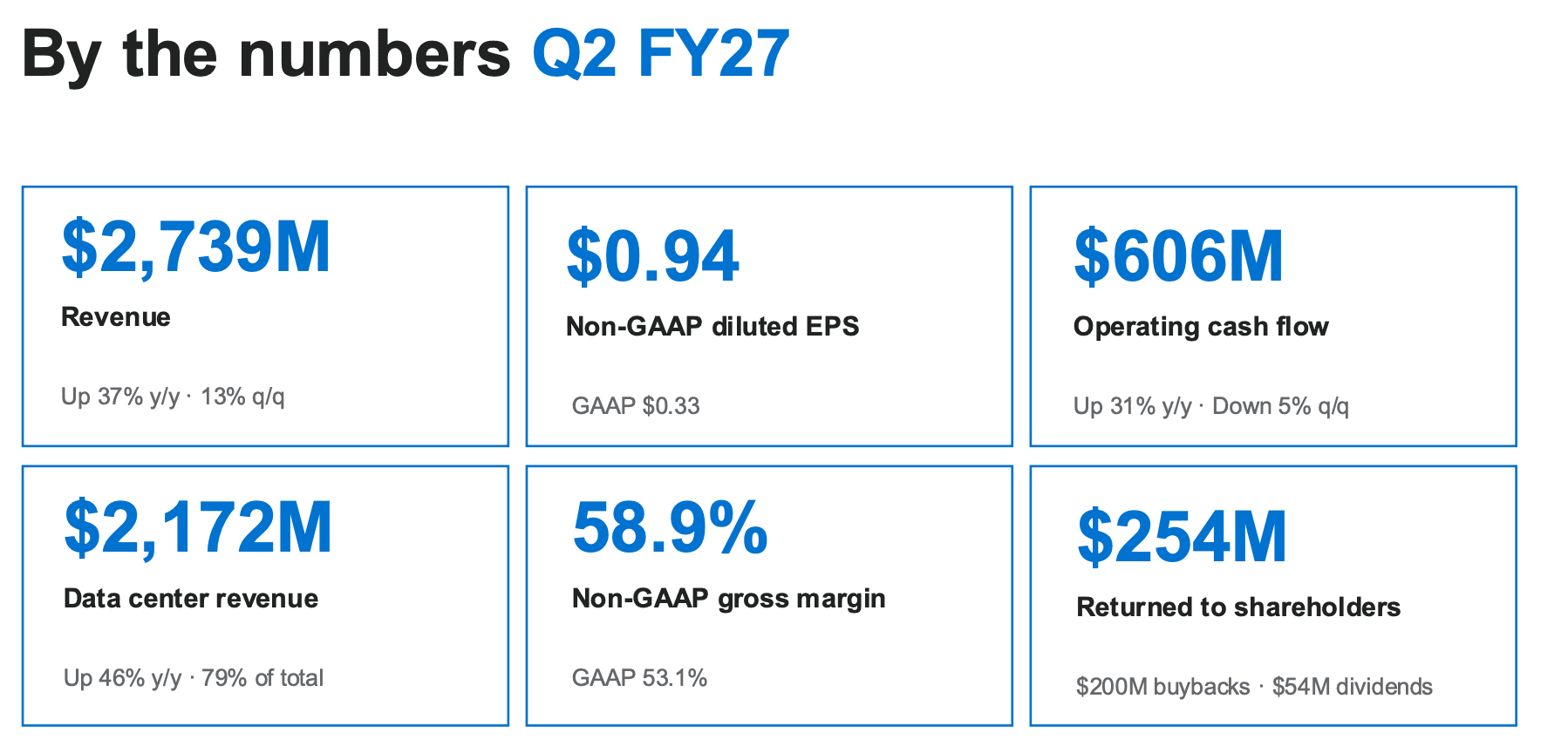
- We remain on pace to make approximately $1 billion of capacity prepayments to suppliers in fiscal 2027, consistent with the guidance we provided last quarter. These prepayments will be applied against future material purchases and will be funded through our strong balance sheet and robust operating cash flow.
- Operating leverage
- Operating margin still has significant leverage embedded in it. You are going to see it up in Q3. You are going to see us entering our target long-term model range, 38%-40% exiting this year. You will see us achieve the high end of that range as we progress through FY28, and we are going to reset that long-term target model here in the coming weeks at the Analyst Day.
Continue reading
Read the rest of this article
The rest of this piece is free.
No account and no payment. We send the work, not marketing.
Still to come
- Guidance
- Other

Filed under
MRVLsemiconductorsSemiconductors & Related Devices
For informational purposes only — not investment advice.