TLDR
There's a lot of thematic content on names like AAOI and COHR. Decent financial analyses are harder to find. I'm filling that void. Both names are risky; both names have significant upside and they have an indiscernible downside if growth in optics does not materialize. That's not ideal. Warren Buffett would not buy either name - buying dollars for 50 cents is easier said than done. So, we're looking at the expensive names (and I'm one of the biggest AI bulls around).
Valuation:
- Base case: using the lower end of management's guidance both names have around ~35% upside
- Bullish case: using the higher end of management's guidance both names have around ~100% upside
Overview
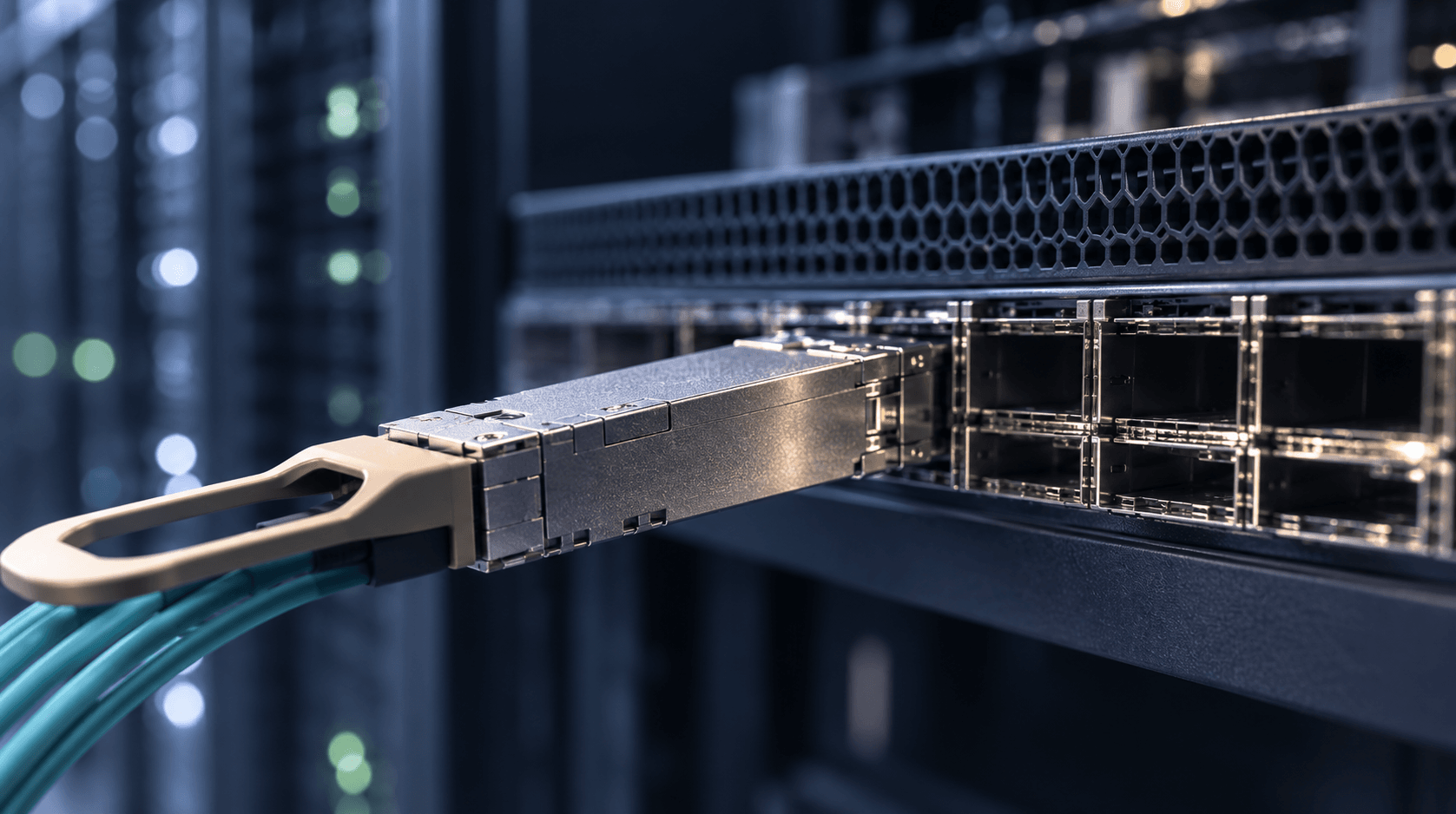
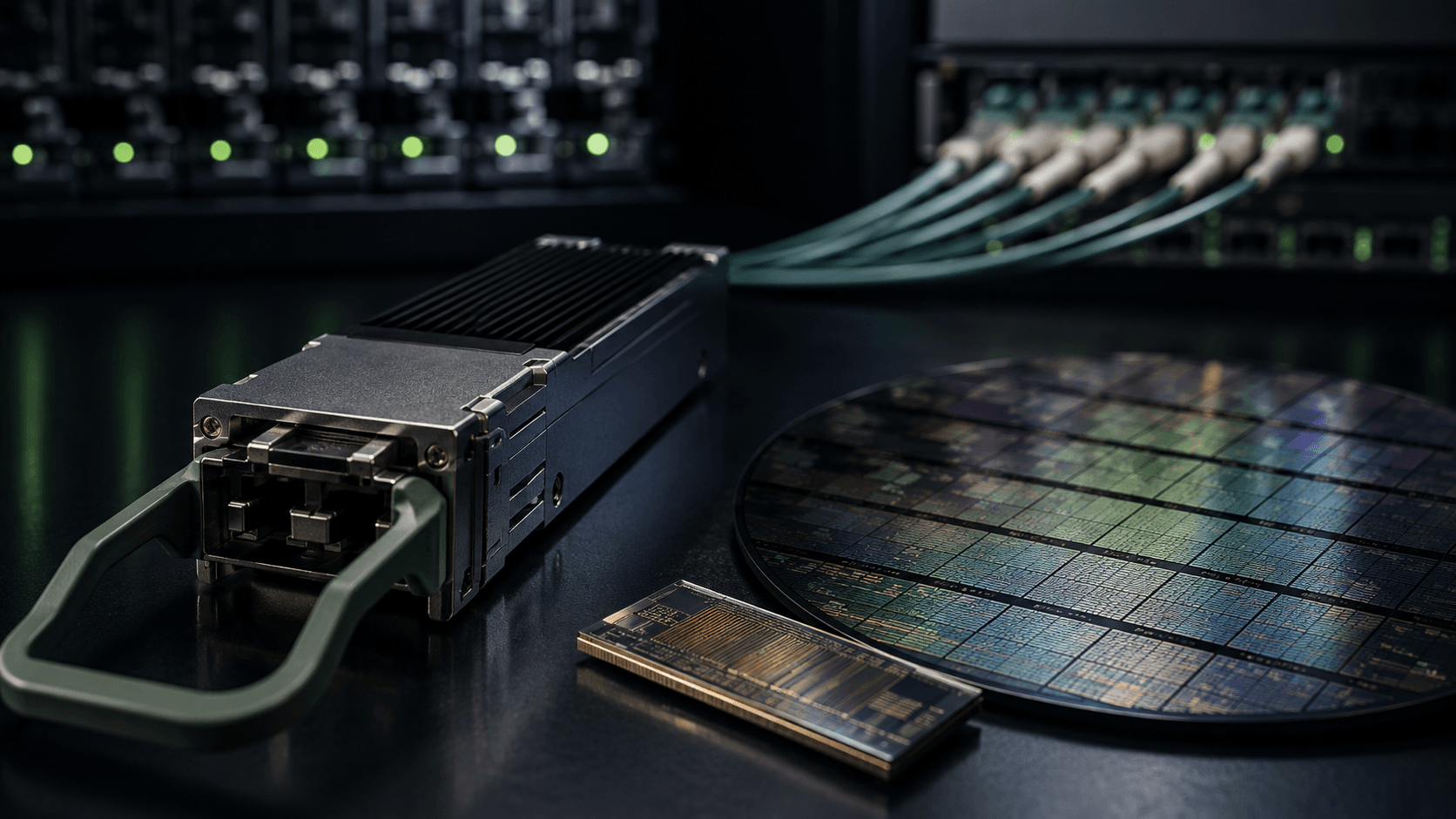
COHR and AAOI both manufacture 800G and 1.6T transceivers, although COHR is significantly larger in terms of revenue and product breadth. COHR also has exposure to adjacent optical technologies such as optical circuit switches and integrated photonics, while AAOI remains a more concentrated play on datacenter transceiver demand.
COHR
COHR has TTM revenue of $7 billion and net income of $770 million. Management is guiding Q1 '27 (their FY ends in June; so we're in Q1 '27 now) revenue to $2.2 - $2.5 billion and EPS to $1.85 - $2.05 - both metrics are projected to increase QoQ by approximately 8 - 18%.
AAOI
AAOI data center segment of the business has TTM revenue of $595 million and lost $57 million. Technically, they also have a CATV (cable television) side of the business which generates about $80 million in quarterly revenue and is projected to grow to $100 million, but the valuation of the business rests squarely on the data center segment so we'll focus on that.
Management at AAOI is guiding to huge revenue growth. They're guiding Q3 '27 revenue to be $1.4 billion, compared to Q2 '26 revenue of $107 million. That was not a typo. They're projecting a one year increase in revenue of ~13x. Specifically, on the Q1 earnings call they said "by mid‑2027, 100G and 400G revenue will be approximately $90 million monthly, 800G revenue will be approximately $217 million monthly, and 1.6T revenue will be approximately $164 million monthly. In total, this is about $471 million per month of data center transceiver revenue."
Dilution:
As of August 3, 2026, there were 84,569,237 shares of the registrant’s Common Stock outstanding. On the Q2 earnings call, management is guiding "to using a weighted average diluted share count of approximately 92.8 million shares."
Financials & Valuation
COHR
Since COHR is larger and more profitable the story is cleaner. In the table below, I calculated FY '27 revenue and net income by extrapolating from Q1 guidance and growing revenue and net income by 8% and 6%, respectively.
How does COHR gain 45% - 90% in the next 12 months?
- Management hits their guidance
- Revenue and EPS continue growing each quarter by ~7%
- P/E multiple does not compress and stays around 70x

AAOI
This one is more fun. How do we grow revenue by ~13x in four quarters? The revenue growth is primarily driven by 800G and 1.6T. 800G is expected to increase by 5x, and 1.6T is expected to start in Q4 '26 and rapidly grow to $492 million in Q3 '27.

How does AAOI gain 36% - 94% in the next 12 months?

- Capacity constraints - Chih-Hsiang Lin, the CEO, stated on the Q2 earnings call that "Demand to support next-generation AI infrastructure remains so robust that our near-term revenue is bounded almost entirely by production capacity and key component availability."
- $200 million order for 1.6T - On the Q2 earnings call, they mentioned a $200 million order for 1.6T transceivers that was placed earlier in the year. Murry, the CFO, stated "deliveries on that probably very late in the third quarter and then ramp into the fourth quarter. I think the bulk of it should get delivered in the fourth quarter. And then there may be a tail into the first quarter. But the important part about that is that's just the first -- the beginning of what we expect to be significant orders from this customer for 1.6T for the foreseeable future. So I wouldn't get too wrapped up on that particular order. That's just the very beginning of it."
- 1.6T Revenue growth - "Q1 next year will be double Q4 or more than double is our target right now."
- Addressing Capacity Constraints - AAOI is currently building a second manufacturing facility and rapidly increasing their production capacity.
- During the quarter, they made further progress building out the 210,000 square foot facility
- "Currently, our total manufacturing capacity is approaching 200,000 units per month, up from nearly 100,000 units per month of 800G and 1.6 terabit capacity at the end of Q1. Looking ahead, we continue to expect by the end of this year that we will be capable of producing over 650,000 pieces of 800G and 1.6 terabit products per month. By the end of next year, 2027, we continue to expect to grow our production capacity to be able to produce over 930,000 pieces of 800G and 1.6 terabit products per month, with over half of that output coming from Texas."
Downside
The challenge with both names is that in the downside scenario we don't know how far it can drop. The recent sell off in both names was a great example: COHR fell 53% from $407 to $222 in less than 30 days. In those scenarios, there's not enough time to diligence the name further. Fear is everywhere. The knife is falling. If you're going to catch a falling knife (and, yes, not selling is the same as buying) then your confidence has to be unshakeable.

Takeaways
Both companies can work from here, but neither is cheap. The upside case is straightforward: management hits guidance, optics demand remains supply constrained, revenue keeps compounding, and the market continues assigning premium multiples. Under those assumptions, both names can still produce 50%+ returns.
The downside is harder to underwrite. At these valuations, a slowdown in growth does not just hurt earnings estimates — it can also compress the multiple at the same time. That is how you end up with 40%–50% drawdowns even when the long-term thesis remains intact.
COHR is the cleaner business and easier to model. AAOI has the more explosive upside, but also requires a much larger execution leap. I own the theme because I believe the AI infrastructure buildout is real, but the valuation matters: these are not “buy it and forget it” stocks. The investment case depends on earnings growing fast enough to make today's expensive multiples look reasonable very quickly.
Filed under
For informational purposes only — not investment advice.